

TL;DR: The first step is to establish and record the purpose of the call. Decide whether you’ll confirm a service, answer a request or make a new offer, then check whether the customer’s records support that purpose. If you plan to include a sales offer, check whether you have permission to make it.

This guide is for South African service-business owners deciding which outbound calls to automate and what each call should cover.
How do you decide what an outbound call is for?
Before you write a script or prepare a calling list, decide what you’re calling the customer about and write it down. For ClearShield Security, the fictitious company I use in the video, that could mean confirming when the technician will come, answering a request for an installation quote or offering an alarm upgrade.
Once you’ve set the purpose of the call, check why the business has the customer’s number. South Africa’s Protection of Personal Information Act (POPIA) requires a specific, lawful purpose for collecting personal information. Section 15 requires any later use to be compatible with that original purpose. Have your legal team check the basis for the use you have in mind. POPIA sections 13 and 15
What should the AI say when it confirms a booking?
A customer has booked a technician to service their alarm. I’d use the AI to call them back, confirm the booking and tell them when the technician is coming.
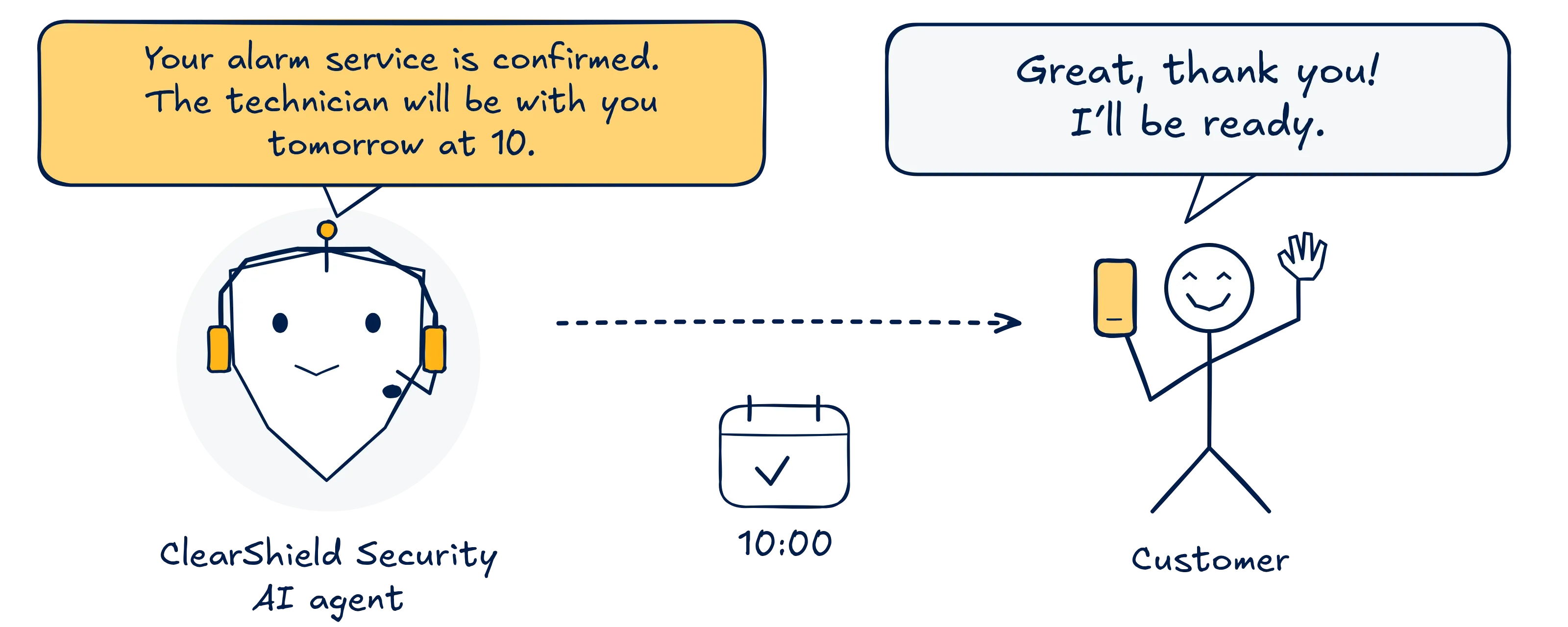
The agent confirms the alarm service for tomorrow at 10.
Who should follow up on a requested quote?
If someone asks ClearShield for an alarm installation quote, I’d have an adviser call them back. The adviser should read the enquiry and any notes from earlier conversations first. They can then ask about anything they still need to know and explain what ClearShield would install and what it would cost. The customer shouldn’t have to explain the job again.
I’d use AI to acknowledge the request or book a time for the adviser to call.
A request for a quote gives ClearShield a reason to call about that quote. If the company later wants to call with a new offer, it needs to establish permission for that marketing call separately. POPIA section 69
When does a service call become marketing?
ClearShield calls to confirm the technician’s visit. Then the AI asks, “While I have you, would you like an alarm upgrade?” That question adds a sales pitch to a call the customer was expecting about their booking.
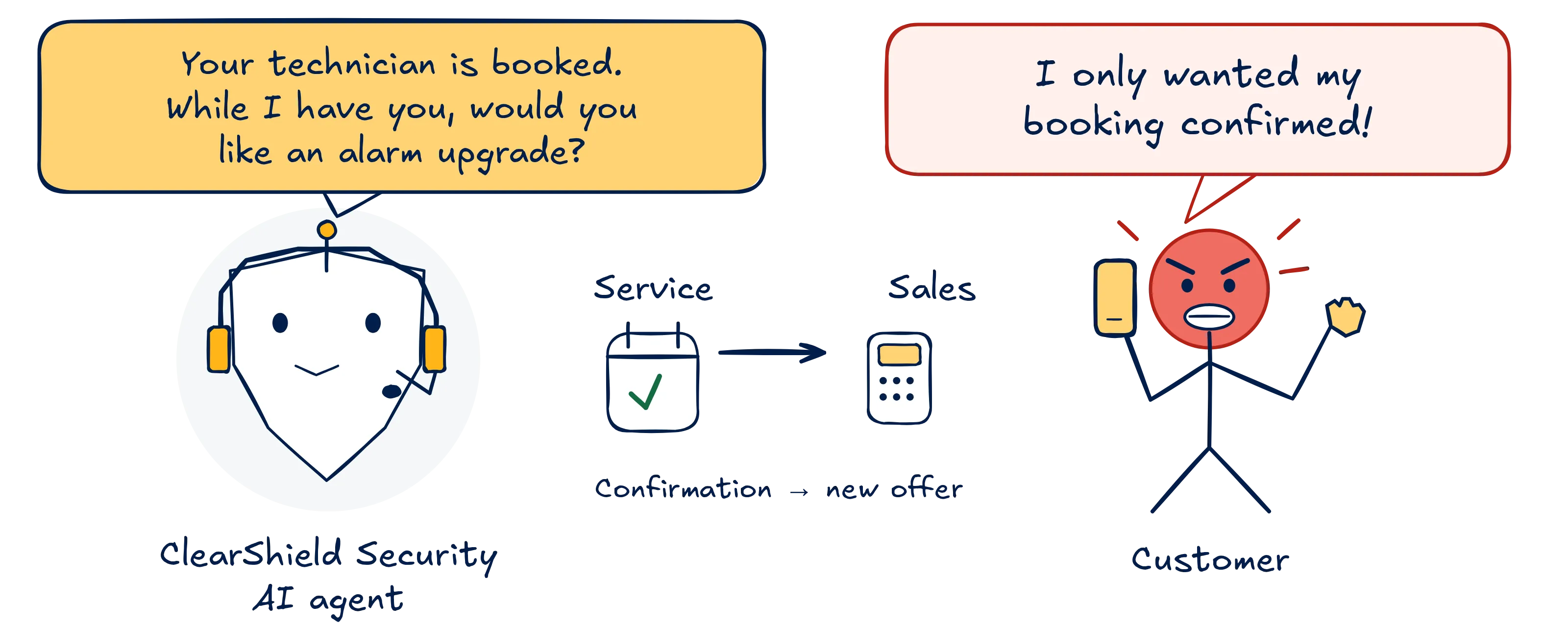
The customer says they only wanted their booking confirmed.
In the video, I focus on consent for the upgrade offer. Under POPIA, ClearShield needs consent for an unsolicited automated sales call unless it meets the existing-customer exception.
To use that exception, ClearShield must have obtained the number in connection with a sale and be offering its own similar products or services. The customer must have a reasonable, free and easy way to object when ClearShield collects the number, and again each time it markets to them if they haven’t already refused. Ask your legal team or a qualified South African lawyer to check whether the exception applies to your planned call. POPIA sections 69(1) and 69(3)
Even when ClearShield has permission to make the offer, I’d keep it for a separate marketing call. A customer who picks up to confirm an appointment should be able to do that and put the phone down.
What should you record before the AI dials?
Before you write the script or prepare a calling list, write down how you’d answer if the customer asked, “Why are you calling me?” Put the booking, enquiry or marketing permission next to that answer. Here’s what ClearShield would record for each call.
Confirm the alarm service for tomorrow at 10. The appointment record shows the customer has booked that visit.
Arrange an adviser callback about the installation quote. The original enquiry shows what the customer asked ClearShield to quote for.
Offer an alarm upgrade. Record what permits ClearShield to make that offer by phone. If it relies on consent, keep the record showing the customer agreed to receive this kind of offer by phone.
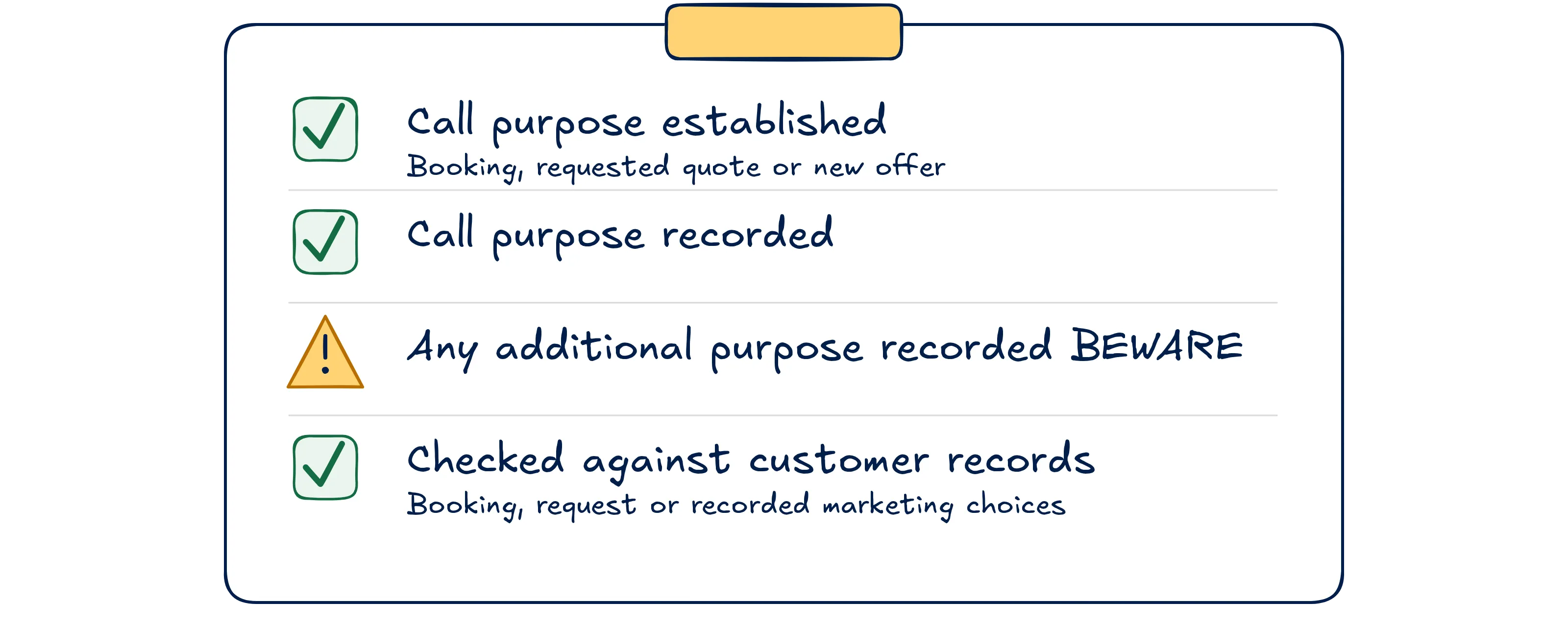
If the confirmation script includes an upgrade, record the offer as a second purpose and check whether ClearShield has permission to make it.
FAQ
What if the customer asks about an upgrade during a booking confirmation?
I’d have the AI acknowledge the question, record what the customer asked for and offer to arrange a conversation with an adviser. That gives the customer a way to discuss the upgrade and keeps the confirmation focused on the appointment.
Can I confirm a booking after the customer has asked for marketing calls to stop?
I’d go ahead with the legitimate service confirmation and keep it strictly about the appointment. Record the marketing objection so the customer is excluded from the marketing calls it covers. Have your legal team check the service purpose and the scope of the customer’s request if either is unclear. POPIA sections 11 and 69
The customer should be able to tell why you called from the conversation they actually have. If you’re deciding which booking or follow-up calls to automate, I can help you design the checks and the handover to your team.