TL;DR: Start by reviewing your contact list: where each number came from and why you believe your business may use it for the proposed call. Having a number or a previous relationship does not automatically give you permission to make marketing calls. This introduction sets out seven questions about who you may call, what you may offer and how your AI assistant should handle the conversation.

This guide is for South African business owners and managers considering Voice AI, an assistant that handles telephone conversations, to call existing customers or older enquiries with an offer.
Why should you review your contact list before planning AI calls?
Find out how your business obtained each phone number and what the person asked for or agreed to. Then write down what you want to offer them. You need to know both before you can check whether you may make the call.
An installation invoice tells you what someone bought. A quote request tells you what they enquired about. A consent record tells you what marketing they agreed to receive. Calling everyone a “customer” or a “lead” hides these differences.
POPIA, the Protection of Personal Information Act, governs how businesses collect and use personal information, including phone numbers. It also sets rules for using that information for marketing. Having someone's number, or having dealt with them before, does not automatically mean you may call them with an offer. POPIA's rules on direct marketing are part of what we will examine in the series.
For now, choose one contact and find the records of your dealings with them. Write down where you got their number, what you want to discuss and why you believe you may call. Note anything you cannot establish from your records so you can raise it during legal review.
What does the ClearShield Security example help you check?
ClearShield Security is a fictitious company I use in the series to explain the questions a business faces before calling customers and old enquiries. Some people on its list have bought something; others have only asked for a quote. Can it call all of them with a new offer?
Its list includes:
Alarm installation customers: People who bought an alarm or had one installed.
Incident Response Service subscribers: People who subscribe to its response service.
Older quote enquiries: People who asked for a quote but did not go ahead.
ClearShield is considering calls about an alarm upgrade or a subscription to its Incident Response Service. For each group, it needs to establish whether it may make that offer by phone and whether it needs to ask for consent first.
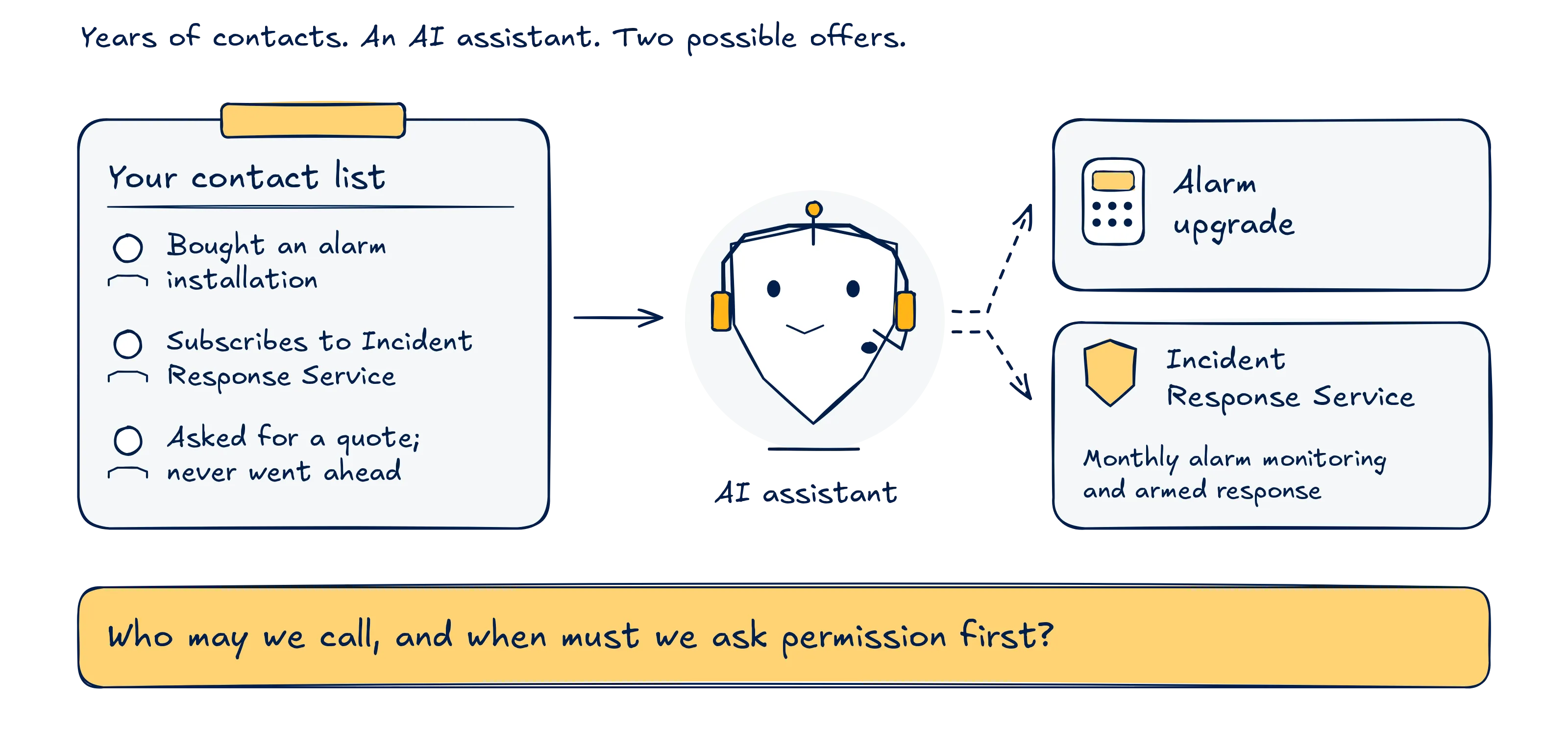
Notice that ClearShield has three groups of contacts and two possible offers; it needs to check who it may call about each offer.
Later episodes will examine when ClearShield may make these calls. To apply the example to your business, identify who has bought from you, who has only enquired and what you want to offer each group.
Which seven questions should you work through before AI calls?
The series will cover seven questions, from whether you may call someone to what your assistant should do if they ask you to stop. Use them to identify what you already know about your proposed calls and what you still need to establish.
Who may you call with an offer? Identify the customers or older enquiries you want to contact and the conversation you propose.
When do you need consent, and how can you ask? Check whether you need the person’s consent for the offer you want to make, and how you may request it.
What should you check and record before calling? Work out which records you need, including how you obtained the number, any consent and previous requests to stop marketing.
When can you call, including callbacks? Consider the planned time and any request to call again.
What happens when someone says “not interested” or “stop”? Decide how the assistant will record their answer and how your business will prevent unwanted follow-up.
What do POPIA, the Consumer Protection Act and relevant regulations require? Establish which rules apply to the calls you want to make.
What should the AI calling system do? Define the checks before dialling, the information it should record and what it should do when someone asks for a callback or says stop.
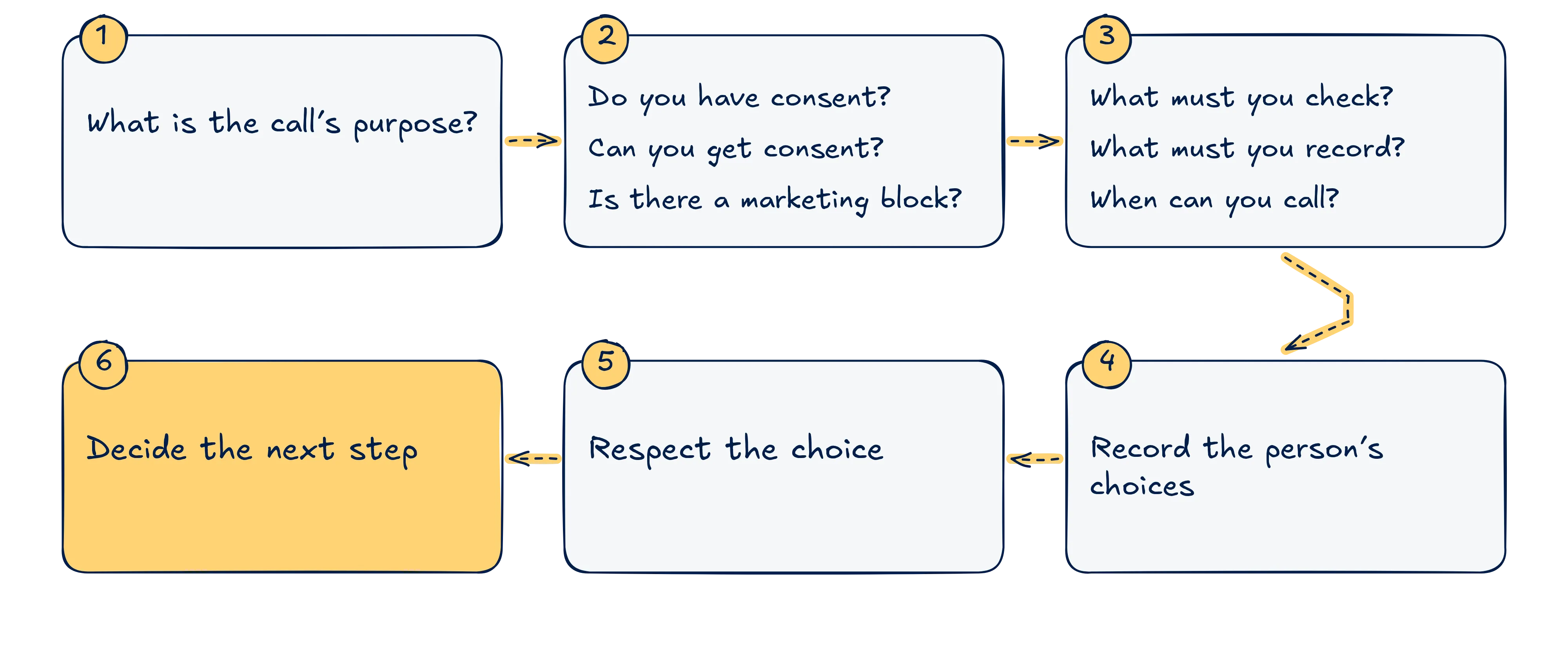
The diagram includes recording the person’s response and deciding what happens next, such as arranging a requested callback or stopping further marketing contact.
This introduction sets out the work ahead. Later videos will examine the questions in more detail, beginning with the call's purpose: service, sales or both.
What should you prepare for early 2027?
Put compliance on your business's agenda now if you are planning AI calls for early 2027. That means understanding who you may call, when you need consent, what records to keep and how to respect someone's request to stop. These are the questions the POPIA 2027 series will explore.
South Africa's National Opt-Out Registry prompted me to look more closely at using AI to contact existing customers and old enquiries. The series covers the broader requirements under POPIA, the Consumer Protection Act and relevant regulations, including how those requirements affect the way we build and use AI calling systems.
The Registry is one part of that preparation. The National Consumer Commission's 7 October 2026 launch statement describes a phased rollout, with consumer blocking scheduled from May 2027. In the video, I describe the Registry as recently released; that should not be read as saying all its functions were available at launch. Check the current arrangements before planning a campaign around those dates.
Early 2027 is a planning target for this series, not a date when POPIA first starts applying. You can begin now by reviewing your contacts and proposed offers, then getting advice on the calls you intend to make.
FAQ
Does this series cover AI answering incoming calls?
The series focuses on outbound calling. Incoming calls become relevant when a service conversation changes into marketing. POPIA's definition of direct marketing includes approaches promoting or offering goods or services. I recommend including any proposed sales offer during an incoming call in your legal review too.
Do I need a particular Voice AI platform to follow the series?
No. I am explaining the business's purpose, permissions and process, so you can follow the series regardless of the Voice AI platform you use. When planning an implementation, you will still need to establish how your chosen tools support that process.
What should you take to legal review before starting AI calls?
Bring enough information for your legal team or a qualified South African lawyer to understand who you intend to call, what you intend to say and how the process will operate. I would prepare these five items:
Contact sources: Where the numbers came from and why they were collected.
Proposed offers: What the assistant would discuss with each contact group.
Consent records: Records showing what people agreed to receive and when.
Previous objections: What people have refused or asked your business to stop doing.
The AI calling process: A description of the proposed checks, conversation, records and follow-up.
I am not a lawyer. This Article provides general information and a way to prepare that discussion; have your proposed calling process checked before putting it into use.
Before building the assistant, establish who it may call and what it should do when someone accepts an offer, requests a callback or asks you to stop. If you are considering AI calls for your business, I can help you turn those requirements into a brief for the system you need.